
Album PC vs POB vs Lucky Draw: What Is the Difference?
Learn how KCC classifies album photocards, preorder benefits and lucky draws, then compare matched Jungkook GOLDEN cards from the same era.
By KCC Team
This guide explains the logic. See real price ranges and market behavior metrics inside the Price Guide.
Album PC, POB, and lucky draw are distribution labels
When a seller calls one card an “album POB lucky draw,” stop and identify it before checking the price. Album PC, POB and lucky draw describe three different ways an official card reached collectors.
KCC classifies an Album PC as a standard card included inside an album. A POB, or pre-order benefit, is an extra card supplied by a named retailer for an eligible order during a stated campaign. A Lucky Draw is a benefit issued through a retailer event where an eligible album purchase gives the buyer a draw or event card.
The category tells you where the card came from. The exact release, member, store, round and image tell you which card it is.
Album PC: packed inside the release
An album PC comes in the album package. The release may contain one random card, several cards, a member-specific pack, or a guaranteed set. Check the official album contents because there is no universal pull format.
Album PCs usually have the broadest route into the market: every eligible album can add more copies. That often keeps prices below event benefits, though a popular image or out-of-print release can still cost more than an ordinary POB.
To identify one, match the album title and version first. Then compare the front image, back design and member against the album inclusion checklist. A retailer logo or event-round label points away from the core album pool.
Jungkook’s GOLDEN Album PC is a useful KCC baseline. Its current verified range is $4.50 to $8.71, with a $6.00 midpoint. One accepted single-card eBay sale landed at $4.50.
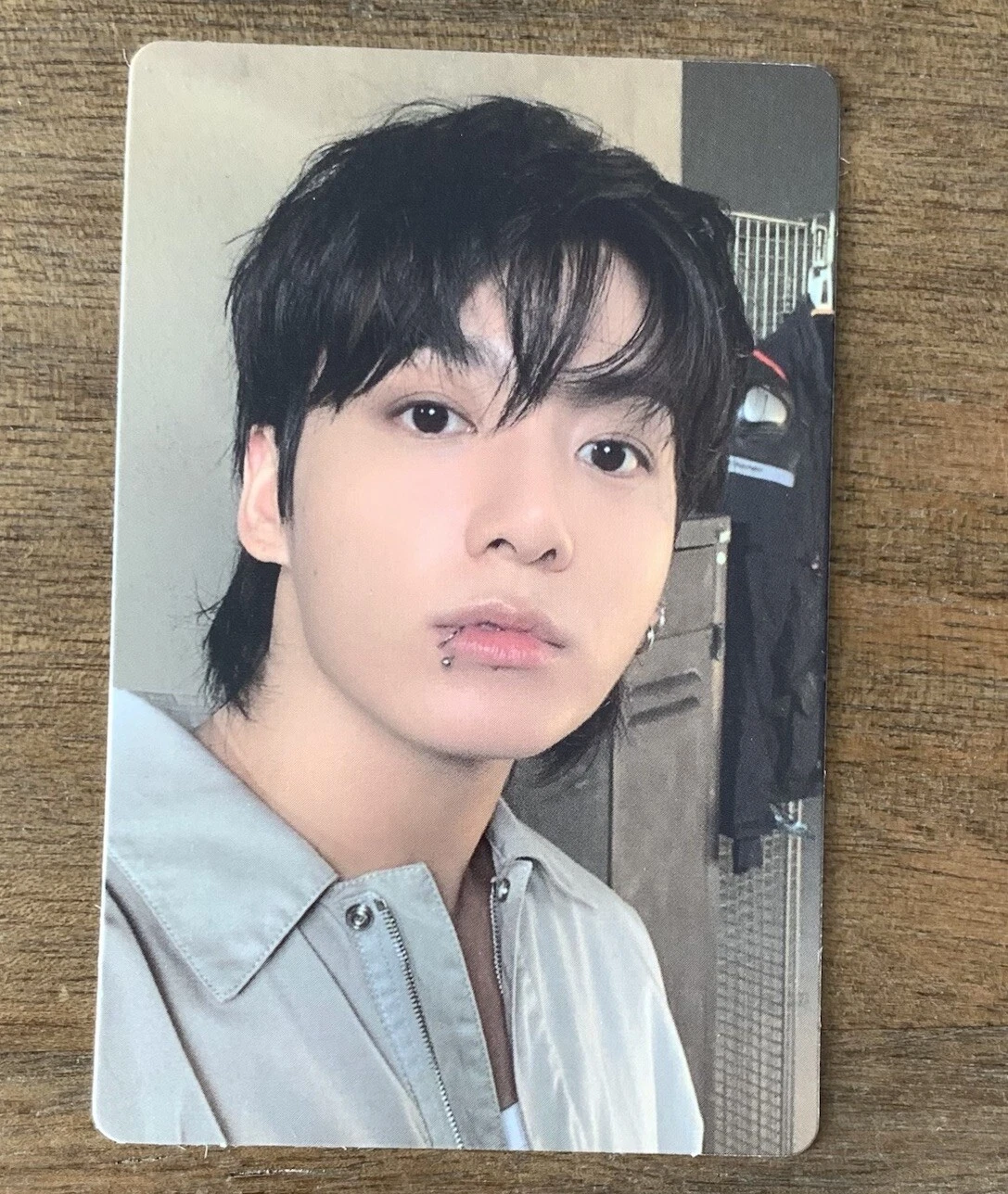
Jungkook - Golden Album PC photocard

BTS Jungkook Golden Album Official Photocard PC Random Photocard
POB: an extra from a particular retailer
A POB is supplied with an eligible preorder or retailer campaign. It sits outside the sealed album’s normal inclusion pool. Two shops can use different photos for the same member and comeback, so “Jungkook GOLDEN POB” is still incomplete without the retailer or exact image.
Some shops keep the benefit window open for weeks. Others close when stock runs out. Large-order group orders can put many copies into resale. That is why “POB” does not automatically mean rare.
Check the order notice, retailer name, campaign dates and benefit preview. On the physical card, compare the full front and back with a reliable store-specific template. Do not decide from cardstock alone; finish and thickness vary across retailers.
KCC’s verified Jungkook GOLDEN POB range is $9.99 to $18.22, with an $11.95 midpoint.

Jungkook - Golden POB photocard
That midpoint is almost twice the matched album-PC midpoint. The comparison is fairer than putting one member’s album card beside another member’s POB, because the member and era stay fixed. It still does not isolate a universal POB premium: the exact retailer, image and accepted evidence remain part of the price.
Lucky draw: a purchase-linked event benefit
A lucky draw attaches a special benefit to an eligible purchase during an event. The mechanic can be physical or online. Some events make every qualifying draw a winner, while others use different rules.
The official first-round GOLDEN lucky-draw notice is unusually clear. It ran online from November 4, 2023 until each store’s photocards ran out, with in-person events from November 10 to 12. One eligible SHINE, SOLID or SUBSTANCE album gave one draw; a three-version set gave four. The benefit used four unreleased photos that varied by store.
That notice tells us exactly why the store and round matter. A card from the second GOLDEN lucky draw belongs to a different three-photo event and should not be merged into the first round simply because both titles say “lucky draw.”
KCC places Jungkook’s verified GOLDEN Lucky Draw at $17.97 to $27.62, with a $24.01 midpoint.

Jungkook - Golden Lucky Draw photocard
One member, one era, three different markets
The matched KCC comparison is direct:
- Album PC: $4.50–$8.71 verified range, with a $6.00 midpoint.
- POB: $9.99–$18.22 verified range, with an $11.95 midpoint.
- Lucky Draw: $17.97–$27.62 verified range, with a $24.01 midpoint.
The lucky-draw midpoint is four times the album-PC midpoint. The POB sits between them. This exact KCC set shows a real tiered result for Jungkook’s GOLDEN era.
The right conclusion is specific: these three verified KCC rows occupy different price bands. It does not prove every lucky draw costs four times its matching album card. Other eras can have a widely supplied event card, an unusually popular album selfie, or thin sold evidence that changes the order.
How to identify the card in your hand
Start with five fields: artist and member, release, category, retailer, and event round. Match the front and back, including crop, text, logo and finish. Search the full identity in completed listings.
If the card came sealed inside the standard album, compare it with Album PCs. If it was an extra supplied by a shop for an eligible order, look for the exact POB campaign. If it came through a named purchase event, find the lucky-draw notice and round.
A seller who cannot name the store or event may simply be using the wrong label. Clear photos can still let you identify it, but do that work before treating the asking price as evidence.
Which tier should you collect?
Choose Album PCs when you want the main comeback set and the widest resale supply. Choose one POB when a retailer concept is your favorite. Choose a lucky draw because you want that exact event image, with the understanding that replacement copies may cost more.
You never need every store and round to complete a meaningful binder. Define completion before buying: core album set, one favorite benefit per era, or a hand-picked image collection. The label explains the route. The exact card and its accepted sales decide the budget.
Save cards. Follow your artists.
Create a free account to save cards you love and keep up with your favorite artists.