
What Makes Some BTS Photocards More Expensive? Card Types, Limited Releases, and Collector History
Learn how album inclusions, POBs, lucky draws, tour benefits, fansign cards and broadcast cards create different levels of BTS photocard scarcity.
By KCC Team
This guide explains the logic. See real price ranges and market behavior metrics inside the Price Guide.
Expensive and rare mean different things
Some BTS photocards cost a few dollars. Others reach the price of a concert ticket or much more. The difference starts with how collectors could obtain the card.
A rare card had limited access: a short window, a specific shop, a random event, a venue visit, a fansign win or a broadcast attendance requirement. An expensive card has buyers willing to pay a high price at a particular moment. The two can overlap, but a high asking price does not prove scarcity, and a scarce card does not automatically have strong demand.
KCC sold listings can show market prices. They cannot reveal a print run when the publisher never released one. Use the distribution history you can verify and avoid inventing copy counts.
Album photocards: broad access and possible reprints
Standard album PCs are random inclusions inside retail albums. A collector may need several albums or trades to pull a bias, but the product itself can be widely distributed. When an album stays available or is reprinted, more sealed copies can keep entering the market.
That is why “old” does not automatically mean “rare.” Jungkook’s BE album PC currently has a KCC range of $2.95 to $4.81 and a $3.72 midpoint. It is an official Jungkook card, yet its ordinary album distribution keeps it in an accessible part of the catalog.

Jungkook – BE core album photocard
Early BTS album rows do not form a clean age ladder either. KCC places Jungkook’s Dark & Wild album PC at a $6.28 midpoint, O!RUL8,2? at $14.00, and In the Mood for Love Pt.2 at $18.49. The exact version, image, available supply and current demand still matter.

Jungkook - O!RUL8,2? Album PC photocard
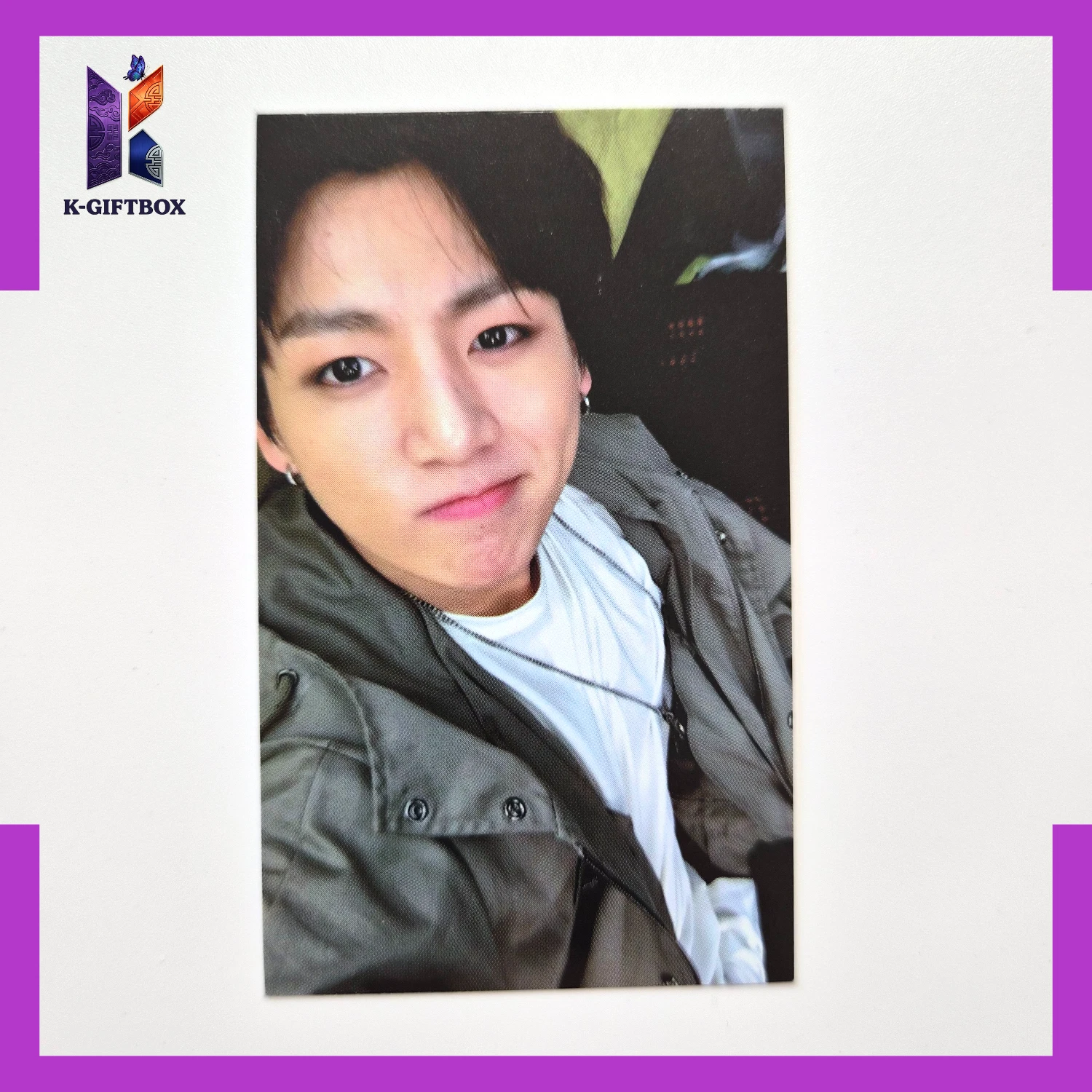
Jungkook - In The Mood For Love Pt.2 Album PC photocard
POBs: one shop and one ordering window
A preorder benefit, or POB, is distributed through a shop during a stated ordering period. The album may remain common while that specific benefit stops being issued.
To judge a POB, identify the retailer and region. “Proof POB” can hide several separate benefits. A Weverse card, a Soundwave card and a Japan fan-club card do not share one supply pool. The retailer name and back design are part of the card’s identity.
The shorter access window can make a POB harder to replace than the album pull. It still does not prove a tiny print run. Large retailers can distribute many benefits during a popular comeback.
Lucky draws: event access narrows the route
Lucky draws are tied to a shop, event or campaign and usually require an eligible purchase during a limited period. Some were available online; others required collectors or proxies to visit a location. That extra friction can narrow the number of copies reaching an international resale market.
Jungkook’s Proof lucky draw sits at a $44.99 KCC midpoint, far above his ordinary BE album card. An accepted eBay sale at $65 shows a buyer paying above the current guide range for that exact benefit.

Official BTS 💜 Proof LUCKY DRAW Soundwave Photocard Jungkook JK
The price gap is real in KCC’s evidence. The reason should be described carefully: the lucky draw had a narrower distribution route and the Jungkook version attracted enough demand to support the observed sales. KCC does not have a published print count for the card.
Tour, fansign and broadcast cards
Tour and venue benefits add a place and date to the requirements. A collector may have needed a ticket, a qualifying purchase at the venue, or access to a local proxy. Fansign cards can require winning an entry or buying through a specific event. Broadcast cards may be issued to eligible attendees at a music-show recording.
Each extra requirement reduces access compared with buying a normal album from a global shop. These categories deserve exact event names. “Broadcast card” alone is still too vague for pricing or a rarity claim.
The ARIRANG World Tour Jungkook lucky draw currently has a KCC midpoint of $75. Two accepted sales at $75 and $79.99 sit near the top of its $54.61 to $79.99 guide range.

Jungkook - Arirang World Tour Lucky Draw photocard
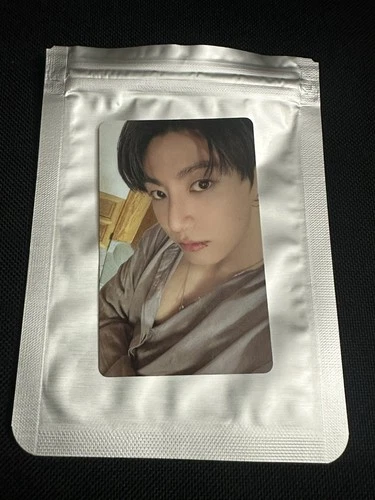
Jungkook JK BTS Arirang World Tour LAS VEGAS Lucky Draw BTS PHOTOCARD PC USA

JUNGKOOK - Official BTS Arirang World Tour USA Album Lucky Draw photocard JK
Those sales make it a strong present-day example of a tour-linked premium. Two transactions remain a thin market, so they should not become a permanent price promise.
The famous Butterful Jungkook sale
In 2021, Korean entertainment coverage reported that a Jungkook Butterful Lucky Event photocard reached $3,213 after 120 bids on eBay.
That reported auction matters as collector history. It captured an extreme moment around a highly desired event card. It does not establish the current value of every copy, prove an official all-time record, or create a multiplier for ordinary Jungkook photocards.
Keep the historical report separate from KCC’s current guide. The original auction is no longer a repeatable live market test, while the KCC embeds above show named cards and reviewed recent evidence. Both are useful when their jobs stay clear.
How to describe BTS scarcity without hype
Start with the card type and exact distribution route. Name the shop, event, venue, region and ordering period when known. Say whether collectors needed an album purchase, a winning entry or physical attendance. State that a release was time-limited only when the official event terms or reliable historical coverage supports it.
Then check current availability and sold depth. A card with one dramatic old auction and no recent matches has uncertain current value. A card with several close recent sales has a stronger price baseline, even when its print run remains unknown.
Avoid “only a few exist” unless a source provides a number. Avoid “rare because it is old.” Avoid treating a seller’s “grail” label as evidence. Precise language is stronger: “tour-stop lucky draw,” “retailer POB,” “fansign winner benefit,” or “standard album inclusion.”
The useful BTS card ladder runs from broadly distributed album pulls through store POBs, lucky draws and access-heavy event cards. Member demand can change the final price, but distribution explains why two official cards began with very different supply paths.
Save cards. Follow your artists.
Create a free account to save cards you love and keep up with your favorite artists.