
What Is a Broadcast Photocard?
Learn what broadcast photocards are, why these official music-show cards can be scarce, and how to verify event details and real sold prices.
By KCC Team
This guide explains the logic. See real price ranges and market behavior metrics inside the Price Guide.
A broadcast photocard comes through music-show participation
A broadcast photocard is an official benefit connected to an artist’s music-show recording or prerecording promotions in South Korea. Collectors also call it a broadcast PC or gongbang poka.
It is separate from the card sealed inside an album and the extra card supplied by a retailer. Its access route runs through a scheduled recording and the artist’s participation rules. That narrower route is why broadcast cards often have less resale supply and higher prices.
“Broadcast” alone is still incomplete. A serious listing should identify the artist, member, comeback, program or promotion period, and exact card design.
The access route is demanding and event-specific
Fans generally apply through the artist’s official platform, receive an entry number, attend roll call, pass the required checks and remain for the recording. The exact requirements change with the artist and event.
An official BOYNEXTDOOR recording notice shows how much access can involve. For the March 26, 2024 recording, 500 participants and 15 waitlisted applicants were accepted first come, first served. Eligibility required ONEDOOR membership, qualifying Weverse Shop album purchases, Melon download proof and profile proof. Attendees also needed matching photo ID, had assigned roll-call times and had to keep the issued wristband.
That notice documents a real participation route. It does not prove that every music show uses those rules, and it does not document Hanni’s card below. For any exact broadcast card, the artist’s notice for that comeback is the right distribution source.
Why broadcast supply is different
An album PC can enter circulation through every eligible album. A POB or lucky draw can enter through eligible retailer purchases while the campaign runs. A broadcast card depends on access to a recording or promotion and whatever distribution the agency announced.
The number of attendees, whether every person received a card, whether the design changed by date, and whether one design covered several recordings all vary. There is no standard broadcast print run. The strong conclusion is about the route: attendance-based distribution limits access far more directly than ordinary retail album supply.
That limited route creates the potential for a premium. Demand decides how large it becomes.
A public KCC example: Hanni’s Get Up broadcast card
KCC identifies this card as Hanni, NewJeans, Get Up, Broadcast. It is a VERIFIED public row with three accepted eBay sales. The guide range is $86.70 to $172.89, with a $162.84 midpoint.
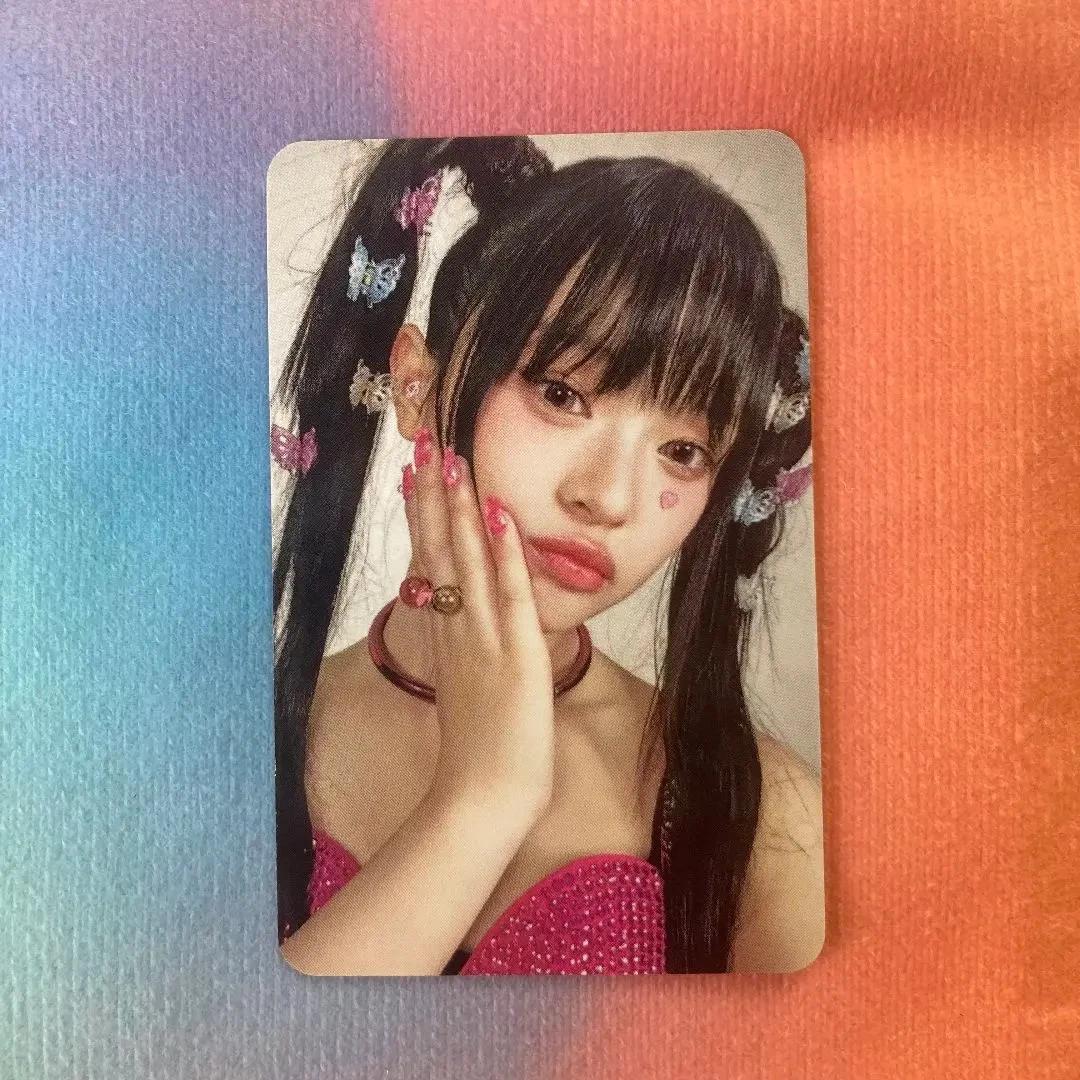
Hanni - Get Up Broadcast photocard
One accepted listing sold for $162.84 and identifies the item as a Hanni Get Up “Sanok Broadcast” official photocard.

NewJeans HANNI Get Up Sanok Broadcast Official Limited Photocard PC New Jeans
The other accepted public prices are $86.70 and $172.89. That is a wide spread across only three sales. The useful conclusion is that real buyers paid broadcast-level prices for this exact KCC card, while the market remains thin enough that one sale can move the range.
KCC’s public identity stops at the member, Get Up era and Broadcast category. It does not name a music program or recording date. Do not add one from an outfit guess. A seller claiming a specific show or date should provide the matching distribution record or a well-documented release template.
Compare it with a retail Hanni card
Hanni’s Supernatural POB is a VERIFIED KCC row with a $14.00 midpoint and a $10.32 to $18.55 range. The Get Up broadcast midpoint is more than eleven times higher.

Hanni - Supernatural POB photocard
These are different eras, so this is a scale comparison rather than a controlled premium. It shows the budget difference collectors can encounter between a retail benefit and an attendance-linked broadcast card. It does not turn “broadcast” into a fixed multiplier.
How to identify an exact broadcast card
First confirm the artist, member and comeback. Then find the promotion schedule and official participation notices. Record the program, recording date or distribution period only when the evidence supports it.
Compare clear front-and-back photos with a documented set. Check the crop, outfit, back text, logo, corner shape and finish. Outfit matching helps, but one outfit can appear across several stages. The back design and a release template often separate similar cards more reliably.
Search sold listings with the full identity. A listing titled only “rare Hanni broadcast PC” is weak. “Hanni Get Up Sanok Broadcast official photocard,” supported by matching photos, gives you a specific card to compare.
What proof to ask from the seller
Ask for fresh front-and-back photos beside the seller’s handwritten username and date. Request a continuous video under angled light for an expensive purchase so you can inspect finish, corners and surface damage.
Ask the seller to name the comeback, program and distribution period. Then check those claims yourself. Attendance items such as wristbands can add context when they genuinely match the event, but they do not replace verifying the card.
If the original notice is missing, say exactly what remains unconfirmed. Do not fill the gap with a universal attendee count or a claim that only a few hundred copies exist. KCC does not store a print run for the Hanni card.
The buying rule
Pay for an exact, documented card rather than the word “broadcast.” The strongest purchase has a confirmed KCC or checklist identity, consistent front and back, fresh seller proof and several accepted sales near the asking price.
Hanni’s Get Up example shows both sides of this market. Broadcast access can support a large premium, and three accepted sales still leave a wide range. Exact identification is what turns a rare-card claim into something you can actually evaluate.
Save cards. Follow your artists.
Create a free account to save cards you love and keep up with your favorite artists.