
What Is a Lucky Draw Photocard?
A collector guide to lucky-draw event mechanics, exact store and round identification, and cautious sold-price comparisons.
By KCC Team
This guide explains the logic. See real price ranges and market behavior metrics inside the Price Guide.
What a lucky draw actually is
You find two cards from the same comeback, both labelled “lucky draw.” One seller wants $19; another wants $65. The label sounds special, but it does not tell you whether the prices make sense.
A lucky draw photocard is an official benefit tied to a retailer event rather than sealed inside the album. Offline events may use a machine or another draw process. Online events may include a random card or a guaranteed benefit per qualifying purchase. The exact mechanic varies by store and round .
That variation is the important part. Before buying, identify the retailer, event round, album, member, and whether the event was online, offline, random, or guaranteed.
PVC is a clue, not a definition
Some machine-dispensed lucky draws use rigid PVC and may show light manufacturing marks. Others use regular cardstock. Paper does not automatically mean fake, and PVC does not automatically prove a lucky draw.
Compare the front, back, finish, and dimensions with a reference for the exact event. A generic “lucky draw template” is too broad.
Are all lucky draws equally rare?
No. Some events are easy for international buyers to enter online. Others require an in-person purchase or a proxy. A comeback may also have several retailer rounds, each with different images and distribution.
The member and photo matter too, as does the number of accepted sales. If only a few clean comps exist, a wide range may reflect uncertainty rather than a neatly defined market.
KCC’s Stray Kids examples show the point. Bang Chan’s 合 / HOP lucky draw currently has a $50.00–$80.00 range and a $69.86 midpoint .
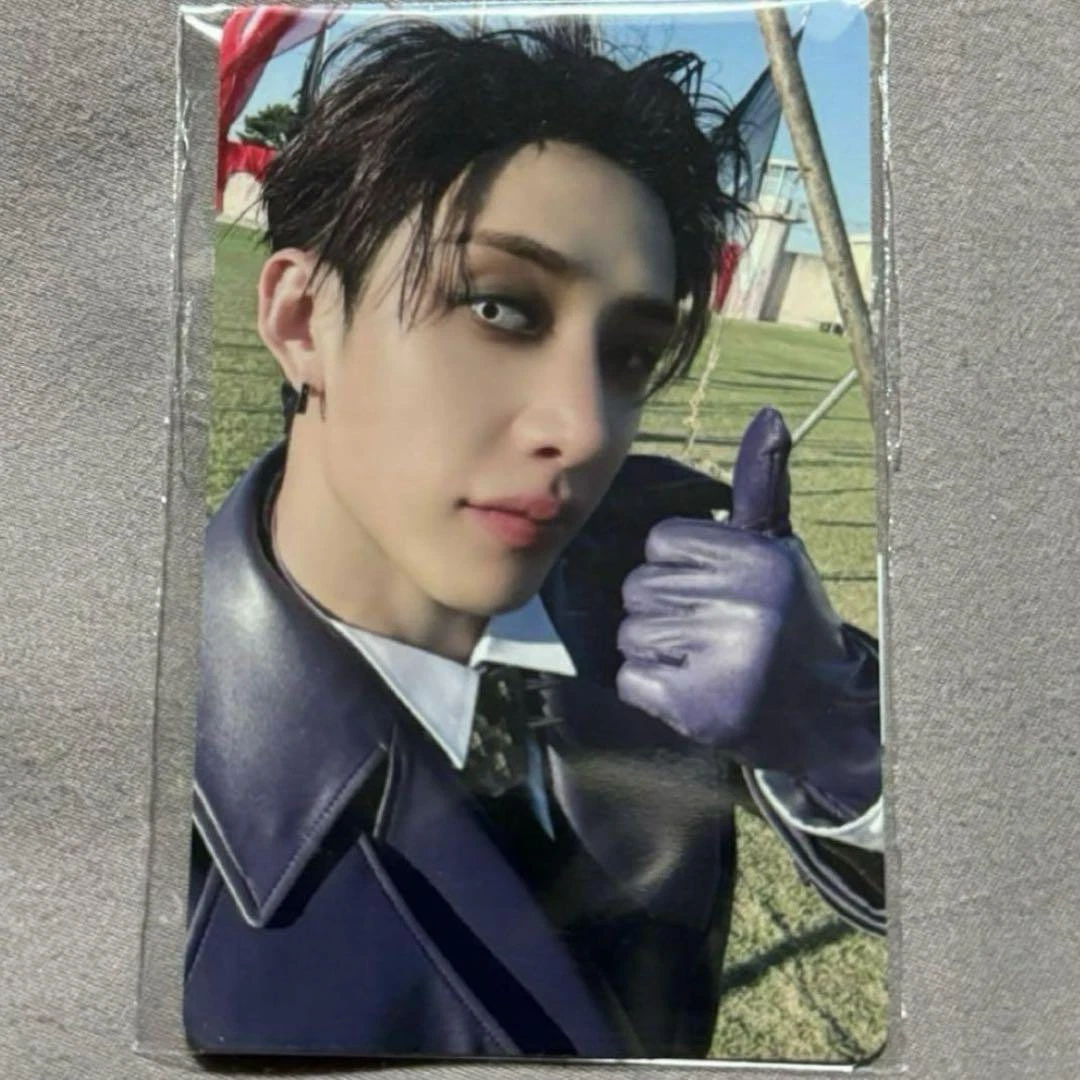
Bang Chan - HIPTAPE HOP Lucky Draw photocard
One reviewed $23.40 sale was excluded from that range as an outlier . An excluded sale is still worth seeing, but it should not be treated as the new going rate by itself.
Stray Kids Bang Chan 合 (HOP) Soundwave Lucky Draw Official Photocard Photo Card
Store and round can change the card
Lee Know’s ODDINARY lucky-draw record covers $24.36–$47.99, with a $35.99 midpoint .

Lee Know – ODDINARY JYP Shop lucky draw / JP benefit photocard
Accepted listings from May 23, 2026 show a Soundwave first-round PVC set at $47.99 and a second-round set at $35.99 .

Stray Kids Lee Know Oddinary Soundwave 1st Lucky Draw PVC Official Photocard Set
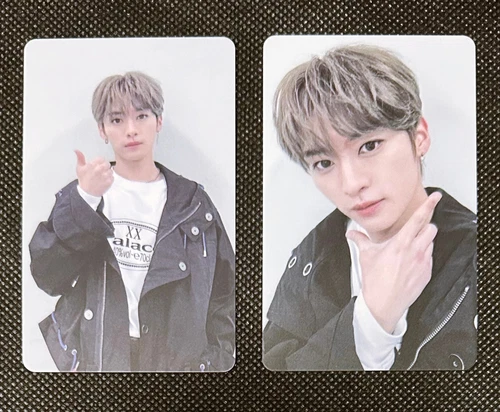
Stray Kids Lee Know Oddinary Soundwave 2nd Lucky Draw PVC Official Photocard Set
That pair is useful because the member, era, retailer, date, and set format are close. It shows an observed difference between those two sales; it does not prove first rounds always command a premium.
Jungkook’s BTS Proof lucky-draw record is another reminder to keep the store attached to the comp. KCC lists the card at $28.77–$56.53 with a $44.99 midpoint .
Accepted sales include a $65.00 Soundwave listing and a $44.99 Power Station listing .

Official BTS 💜 Proof LUCKY DRAW Soundwave Photocard Jungkook JK
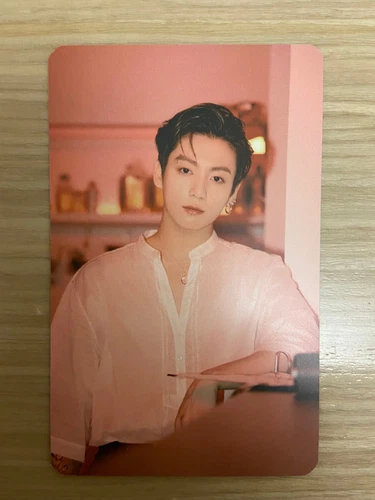
BTS Jungkook Proof Lucky Draw Power Station Official Photocard photo card
Those are different store cards, so visual preference, distribution, listing condition, and timing may all contribute. The sales do not isolate one cause.
How to read thin or messy comps
Heeseung’s ENHYPEN THE SIN : VANISH lucky-draw record spans $16.00–$45.00, with a $22.56 midpoint .

Heeseung - THE SIN : VANISH Lucky Draw photocard
A Muvve card sold for $19.00, while a Music Korea listing sold for $5.99 and was excluded as an outlier .
![[ENHYPEN] HEESEUNG THE SIN : VANISH Muvve Lucky Draw Photocard sold listing](https://i.ebayimg.com/images/g/LesAAeSw6wJp4hG3/s-l140.webp)
[ENHYPEN] HEESEUNG THE SIN : VANISH Muvve Lucky Draw Photocard

Heeseung Official Music Korea Lucky Draw Photocard Enhypen The Sin : Vanish Kpop
Because these are different retailer editions, do not use either sale as a universal price for “Heeseung lucky draw.” Search the exact store card.
A buyer’s five-minute check
Ask for the retailer and round. Confirm whether the event notice describes a random draw, a guaranteed benefit, or another mechanic. Compare both sides of the card with the exact event template. Check accepted sales for the same member, store, round, and condition. If there are only one or two useful sales, leave room for uncertainty.
A lucky-draw label tells you where to begin the research. The exact event tells you what you are holding.
Save cards. Follow your artists.
Create a free account to save cards you love and keep up with your favorite artists.