
Why Stray Kids Photocards Are So Expensive
Explore why Stray Kids photocards reach high resale prices through KCC data on album pulls, store Lucky Draws, Japan benefits, and cross-group comparisons.
By KCC Team
This guide explains the logic. See real price ranges and market behavior metrics inside the Price Guide.
The Tiered Reality of the Stray Kids Photocard Market
Many collectors entering the Stray Kids secondary market encounter an immediate contrast: while standard album photocards remain widely available for a few dollars, certain event-exclusive cards, venue Lucky Draws, and retailer pre-order benefits (POBs) regularly command high premiums. This price dynamic often leads new fans to ask whether the entire Stray Kids market is expensive, or if high costs are concentrated in specific card categories. By examining verified KCC Price Guide records, sold listing evidence, and cross-group comparisons, collectors can clearly separate baseline album pulls from high-tier event perks and build a focused collecting budget.
A common misconception among new K-pop fans is that every Stray Kids photocard requires a major financial investment. In reality, the secondary market for Stray Kids is sharply segmented into distinct price tiers. Standard album pulls from major full-length and mini-album releases remain widely available on secondary market platforms.
Core album cards are produced in high volumes, keeping secondary market supply steady across versions. For instance, the Bang Chan ★★★★★ / 5-STAR Album PC carries a price range of $1.98 to $4.86 with a midpoint of $3.14 , while the Seungmin ★★★★★ / 5-STAR Album PC sits between $2.49 and $5.00 with a $3.11 midpoint . KCC data classifies the Bang Chan 5-STAR card in the "Healthy (liquid)" zone, indicating steady sales velocity where collectors can easily buy or trade . Real marketplace transactions consistently confirm this baseline accessibility: on eBay, verified sold listings for the Bang Chan 5-Star album photocard show accepted sales at $4.00 on May 18, 2026 and $5.00 on May 7, 2026 within its verified market profile.

Bang Chan - ★★★★★ / 5-STAR Album PC photocard

Stray Kids Bang Chan 5-Star Photocard

Straykids BangChan 5-star Photocard
Other core album pulls across different eras demonstrate similar baseline stability. The Changbin THE SOUND Album PC carries a midpoint of $2.07 with a price range of $1.89 to $3.56 , while the I.N NOEASY Album PC sits at a midpoint of $2.42 within a range of $1.85 to $4.21 . Even Japanese release album pulls, such as the Changbin CIRCUS Album PC with a $2.79 midpoint ($2.08 to $4.16 range ), reflect affordable baseline pricing.
With standard album cards carrying midpoints between $2.02 and $3.27 , pricing tiers shift upward when moving from standard album pulls into event-based cards and store benefits .
Event Perks, Store POBs, and Venue Lucky Draws
The largest driver of higher prices in the Stray Kids photocard market is the presence of store pre-order benefits (POBs), Japanese limited editions, and offline venue Lucky Draws. During comeback periods, major music retailers offer store-exclusive photocards as incentives, while pop-up stores and concert venues host physical Lucky Draw machines upon qualified album purchases.
Secondary market listings show smaller circulating quantities for event cards compared to standard album pulls. For example, the Bang Chan 合 / HOP Lucky Draw photocard commands a price range between $50.00 and $80.00 with a $69.86 midpoint . Similarly, the Han 合 / HOP Lucky Draw photocard spans from $26.50 to $75.99 with a midpoint of $64.70 . Japanese album exclusives show similar premiums: the Han GIANT Japan Limited photocard carries a price range from $42.00 to $55.40 with a $43.79 midpoint , while the Bang Chan DO IT Lucky Draw photocard ranges from $21.99 to $54.00 with a $43.25 midpoint .
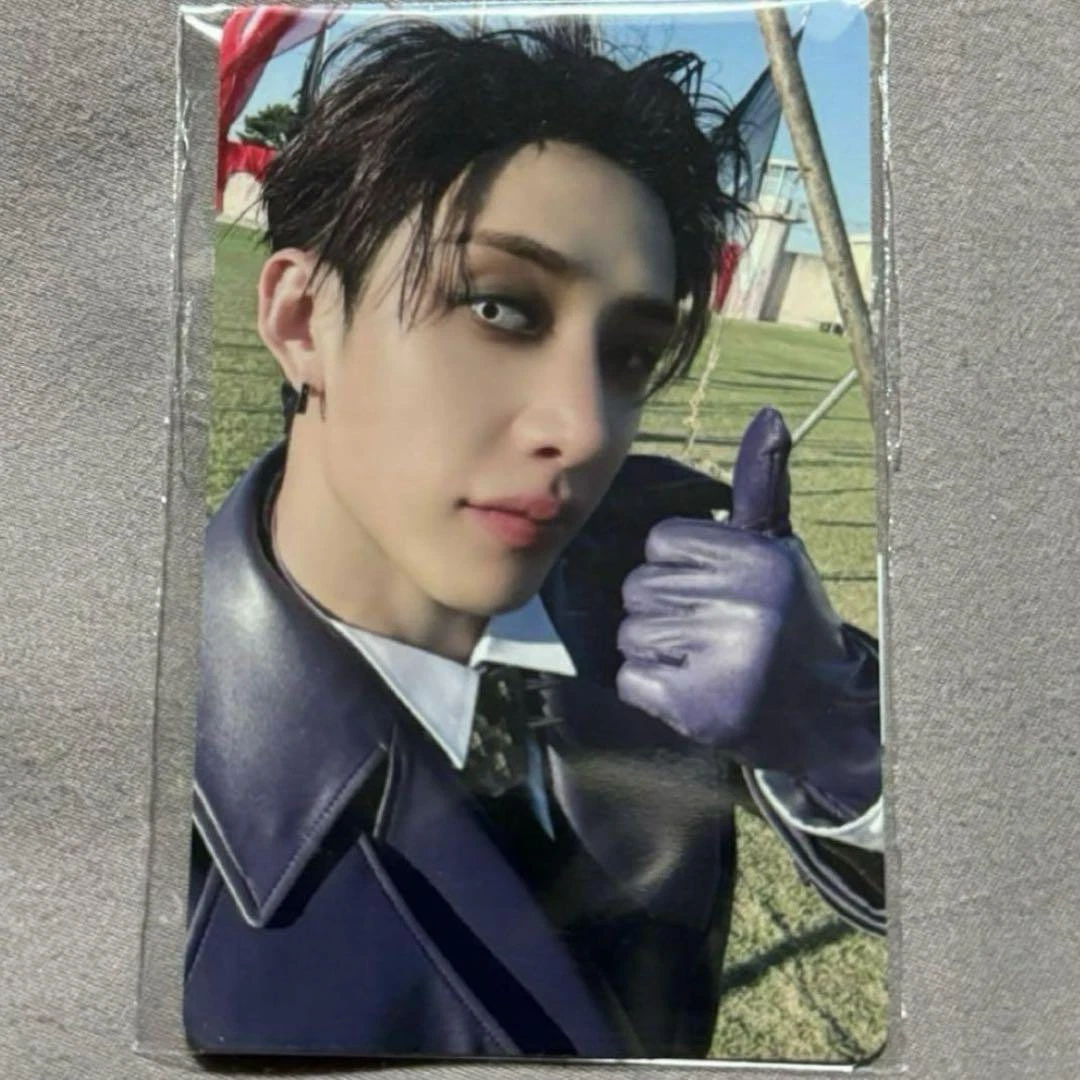
Bang Chan - HIPTAPE HOP Lucky Draw photocard
Comparing a standard album card with a $3.14 midpoint to a venue Lucky Draw with midpoints from $64.70 to $69.86 reveals a midpoint multiplier that can exceed 20x . Confirmed secondary market activity shows buyers paying these higher rates for venue-exclusive items, such as a listing described as a Han 合 / HOP HMV Lucky Draw photocard that sold on eBay for $71.97 on May 10, 2026 .

A official Photo card SKZHOP HIPTAPE HAN Stray Kids 合 HOP HMV Lucky Draw
To help collectors evaluate liquidity, KCC tags the Bang Chan 合 / HOP Lucky Draw card in the "Premium (watch comps)" liquidity zone . This classification flags high-value cards where sales volume is lower and price ranges carry elevated baselines . For collectors, this means individual transaction comps should be verified carefully, as small shifts in buyer competition can move market asking prices significantly.
Cross-Group Comparison: Structural Market Differences
Comparing Stray Kids with other major K-pop boy groups highlights how secondary pricing dynamics differ across fandoms. In many K-pop markets, secondary prices reflect album age and out-of-print status, where older album pulls command higher valuations.
For example, in ATEEZ's secondary market, early debut era album pulls carry higher baseline valuations. The Wooyoung TREASURE EP.1 : All to Zero Album PC photocard commands a price range of $32.50 to $75.00 with a $50.00 midpoint . Similarly, the Seonghwa Treasure Ep. 3: One To All Album PC photocard ranges from $21.15 to $41.38 with a $30.44 midpoint . For ATEEZ collectors, early album pulls function as high-value chase cards regardless of whether they were special store benefits or standard album inserts .

Wooyoung - TREASURE EP.1 : All to Zero Album PC photocard
In contrast, Stray Kids standard album pulls stay low in midpoint value across eras. Even older album cards, such as the I.N MIROH Album PC with a $3.04 midpoint ($2.15 to $4.86 range ) or the Hyunjin MIROH Album PC with a $3.24 midpoint ($2.76 to $5.00 range ), maintain accessible midpoint valuations . Verified baseline marketplace activity reflects this accessibility: on eBay, a Hyunjin MIROH Album Black Version photocard accepted a sale at $9.00 on July 10, 2026 , aligning close to standard historical album pulls.

Stray Kids - Hyunjin Official Miroh Album Black Version Photocard
However, individual transactions can occasionally spike during temporary hype cycles. Reviewed outlier sales reached $14.99 on May 24, 2026 and $20.00 on July 16, 2026 , but were excluded from the official Hyunjin MIROH KCC Price Guide range of $2.76 to $5.00 . This comparison shows that Stray Kids premiums are concentrated almost entirely in event tiering (Lucky Draws and limited benefits) rather than out-of-print album card scarcity.
Value Retention and Navigating Asking Prices on Older Event Cards
While immediate comeback hype drives initial surges in Lucky Draw and store pre-order pricing, older event cards for high-demand members often maintain secondary value long after release. However, asking prices on older event cards can sometimes outpace accepted historical comps, creating potential traps for buyers.
For example, the Lee Know – ODDINARY JYP Shop lucky draw / JP benefit photocard retains a price range of $24.36 to $47.99 with a midpoint of $35.99 .

Lee Know – ODDINARY JYP Shop lucky draw / JP benefit photocard
Accepted sales evidence confirms that collectors continue to pay premium rates for older era Lucky Draws: on eBay, a Lee Know Oddinary Soundwave 1st Lucky Draw photocard set sold for $47.99 on May 23, 2026 , and a Soundwave 2nd Lucky Draw photocard set sold for $35.99 on May 23, 2026 .

Stray Kids Lee Know Oddinary Soundwave 1st Lucky Draw PVC Official Photocard Set
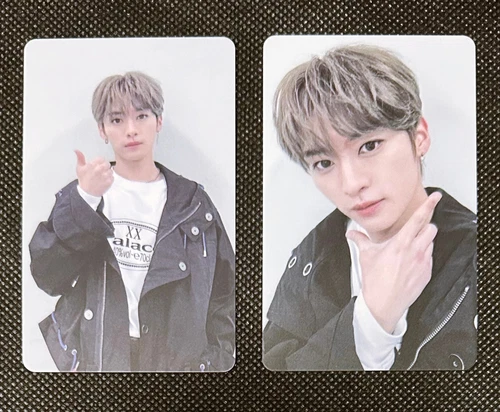
Stray Kids Lee Know Oddinary Soundwave 2nd Lucky Draw PVC Official Photocard Set
Importantly, KCC assigns this Lee Know ODDINARY card a "High (overpriced risk)" liquidity warning . This warning indicates that while the midpoint sits at $35.99 , recent seller asking prices have experienced volatility where unverified listings jumped significantly above accepted market comps . In practical terms, "overpriced risk" advises collectors to verify recent completed sold listings rather than paying unverified asking prices during hype waves.
Strategic Collector Advice: How to Budget Smartly for SKZ
Navigating the Stray Kids photocard market successfully requires clear goal setting and an understanding of market segmenting. Because secondary prices are heavily tiered, collectors can build rewarding binders without overspending by applying a few practical budgeting strategies:
- Build binder foundations with core album pulls: Standard album photocards from eras like 5-STAR, ROCK-STAR, and NOEASY offer visual variety for $2.00 to $5.00 per card . Collecting album pulls allows fans to complete bias binder pages at accessible price points .
- Set realistic boundaries on POBs and Lucky Draws: Attempting full OT8 or full store line completion across every comeback can quickly accumulate high costs due to $35.00 to $70.00 event midpoints . Choose specific favorite concept photos or store benefits rather than chasing full store sets.
- Cross-reference asking prices with accepted comps: When shopping for older Lucky Draws or store POBs, always compare seller listings against verified sold comps to avoid paying speculative markups on cards flagged with overpriced risk warnings .
- Monitor liquidity zone indicators: Pay attention to liquidity signals like "Premium (watch comps)" or "High (overpriced risk)" on high-value cards . These tags remind buyers that patience often yields better deals when temporary hype settles.
By grounding purchase decisions in verified market data, Stray Kids collectors can enjoy collecting their favorite member photocards while keeping their budget balanced across releases.
Save cards. Follow your artists.
Create a free account to save cards you love and keep up with your favorite artists.